
Paula Markovitch: the screenwriter who refused to be a guest in her own dreams
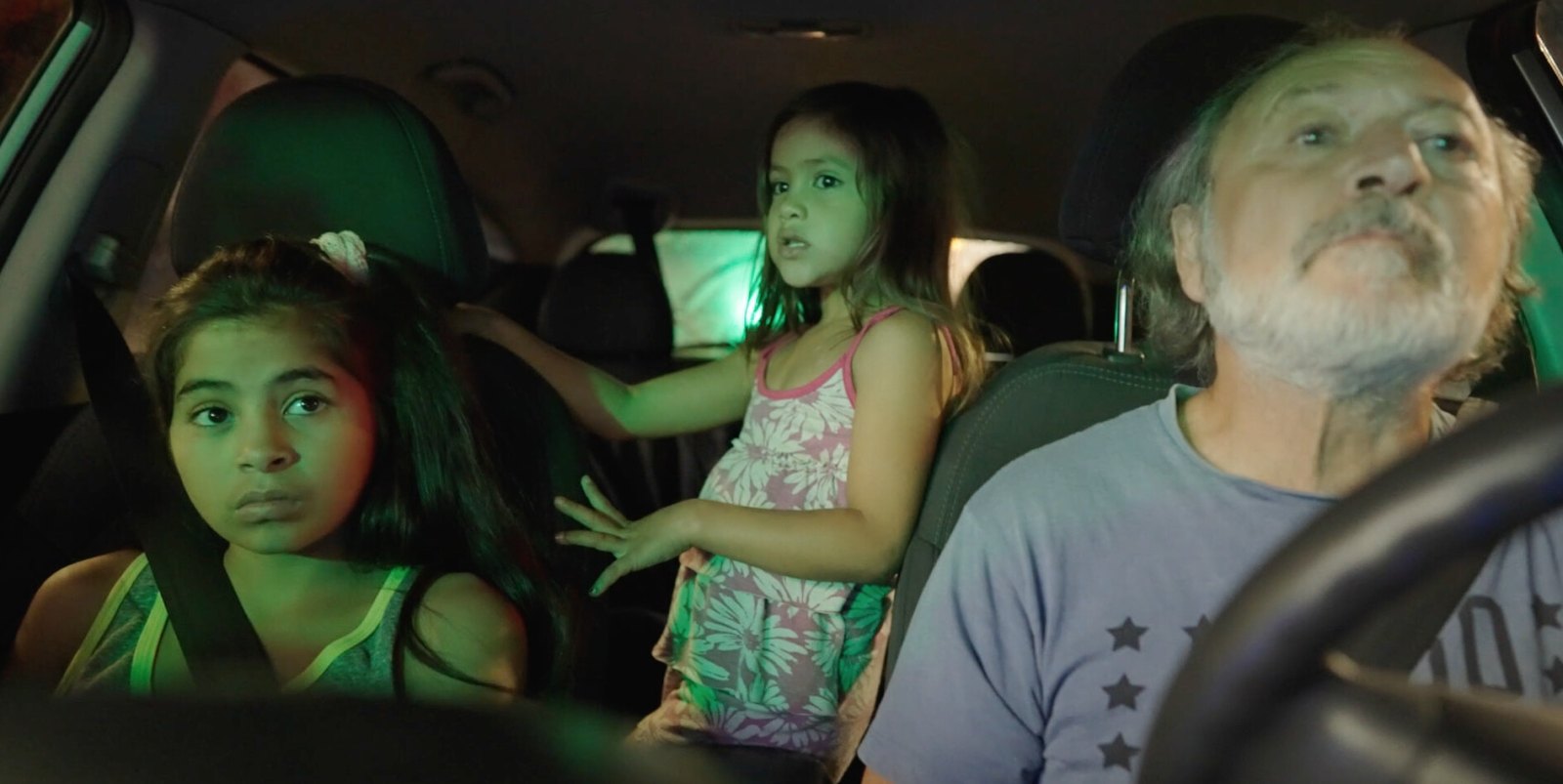
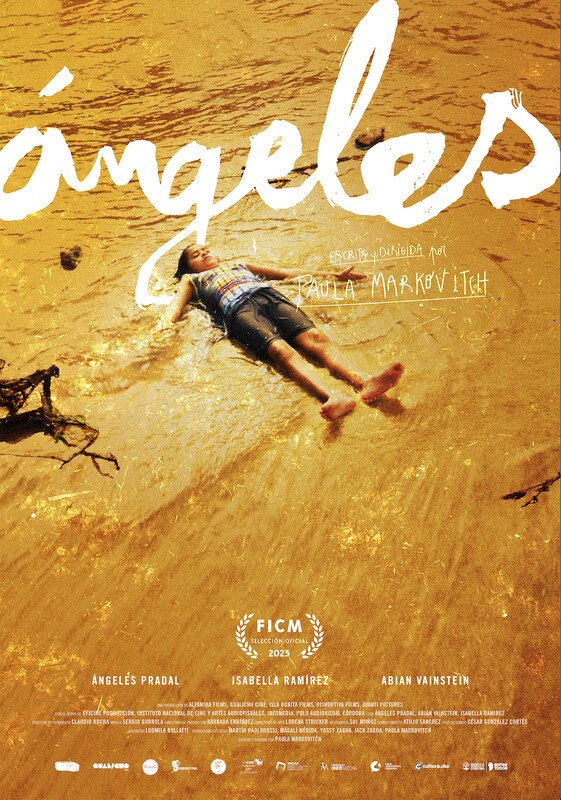
Paula Markovitch was 22 when she left Buenos Aires for Mexico City. She had grown up poor, in marginal neighbourhoods, the daughter of two visual artists, Armando and Genoveva, who lived through exile during Argentina’s last dictatorship. Three decades later she is a screenwriter, a director, a writer of books and a teacher of filmmakers, and her fourth feature as a director, Ángeles, is a Finalist for Best Fiction Feature Film at the 2026 edition of New York City Films InFest. In a long written interview with the festival, she talks about starting over, about the authorship that cinema so often takes away from writers, and about the right of the poor to be happy.
Becoming a child again
For Markovitch, migrating was not a rupture to be mourned but a strange kind of rebirth. “When you migrate, you become a child again; you learn to speak again, to walk again,” she says. “The meaning of a look is different. Every gesture has a new interpretation.” The journeys of her life, she adds, have been “anguished and happy at the same time. And out of that combination I was born with a new identity.”
She does not think it is a coincidence that art blooms where cultures meet.
“Diversity is fertile.”
A guest in someone else’s dream
Before she ever directed, she wrote for others. Her name is on Mexican films such as Sin remitente (1994), Temporada de patos (Duck Season, 2003), Lake Tahoe (2008) and Dos abrazos (2008), and later La caja (2020) and Lluvia (2023). Those years left her with a firm conviction about who the author of a film really is.
“A true co-authorship is very unlikely,” she argues, “because it would mean that two psyches can merge completely… as if we could invite someone into our dreams.” Directors and the rest of the artists on a film have talent and creativity, she says, but they are “guests in a space dreamt up by the writer”. And she insists it is not about credits, fees or ego:
“It is a problem of identity. Human beings are not original. We resemble one another. But each of us has a singular, unrepeatable stroke, and that unique voice gives us meaning and purpose.”
From the margins to the Berlinale
When she finally directed her own script, the result was El premio (The Prize), which won a Silver Bear at the Berlin International Film Festival and, in 2011, the Ariel Awards for Best Film, Best Screenplay and Best Editing from the Mexican Academy of Film. It travelled to festivals such as Morelia, Guadalajara, Lima and Jerusalem, and was presented at the Museum of Modern Art (MoMA) in New York in September 2013. Cuadros en la oscuridad followed in 2017 and El actor principal in 2020.
People have told her that her characters tend to be marginal. Her answer is personal.
“I usually talk about poor people… because I was poor myself… and I still am. (I hope that changes one day, haha.)”
And then she turns the idea around: ancient plays were about kings, she recalls, when there were thousands of beggars, soldiers and servants and only one or two kings. “I think today ninety percent of the world’s population lives in precarity. That is to say, statistically, we are the majority. Who says where the centre is?”
The right to joy
What bothers her most is a certain way of filming poverty, in which poor characters are never allowed to have fun. That gaze, she believes, belongs to filmmakers “who have never been poor”, who imagine that people living in precarity “must be crying all day long”.
“In my experience it is the other way round. Precisely when conditions are adverse, people tend to cling harder to moments of joy. In Mexico, where I live, we are very joyful. We even celebrate death. Life is hard enough without wasting time on lamentation… let’s dance while we are still here.”
She refuses both of the usual portraits of the poor: the very good victim of injustice and the very bad product of that same injustice.
“The truth is we are good on Mondays, bad on Wednesdays… and on Thursdays we tell good jokes.”
Nor does she want tears on screen as the answer to injustice: “Of course it is unfair! Better to make a revolution… let’s not stay crying in a film.”
A promise made to an eight-year-old
Ángeles began with a look. On the set of Cuadros en la oscuridad, Markovitch worked with a girl of eight, Ángeles Pradal, in a brief scene. “I was spellbound by her gaze, wise, furious and tender at the same time,” she remembers. “I promised her: I will come back and make a film with you. And that’s what I did.”
The film follows a fourteen-year-old girl who sells sweets on the street with her little sister, and David, a man in his fifties who works in a parking lot. One afternoon he tells her he wants to die. She does not try to talk him out of it. Ángeles, Markovitch says, “looks with naked eyes… without pity and without guilt”.
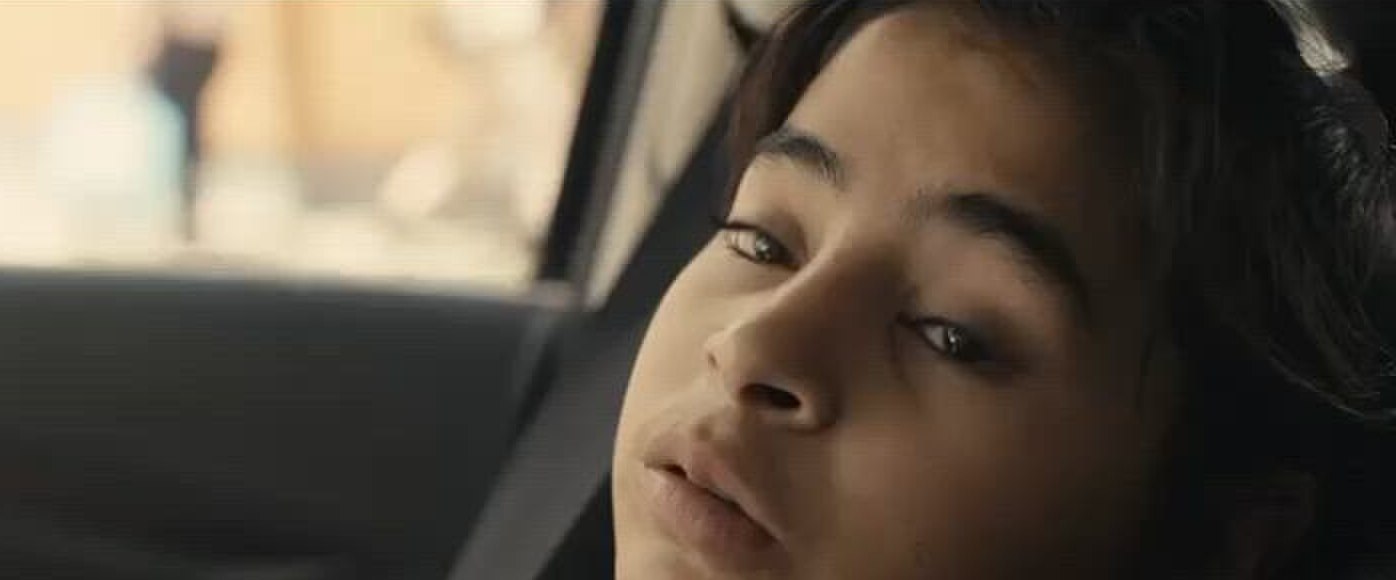
The script changed as soon as it met the actors. On paper, Ángeles was more naive, David kinder and Isabella more helpless. Through intense improvisation with Ángeles Pradal, Isabella Ramírez and Abian Vainstein, Ángeles became decisive, David more mysterious and Isabella more reckless. “Miraculous instants appear,” she says, “moments of revelation where the boundaries between characters and actors blur, and you glimpse the soul.”
Vain, and proud of it
There is no false modesty in Markovitch. Asked whether her relationship with prizes and festivals has changed over the years, she answers with disarming honesty.
“I am vain. I love prizes, like everyone. And it saddens me when a work doesn’t find visibility. Success is like chocolate ice cream… we all like it!”
What she does question is the criteria by which films are legitimised. Some festivals, she believes, “still haven’t escaped a colonial perspective, and look for works that confirm a condescending view”. The answer, for her, is to review those criteria together, “not to ask artists not to celebrate their triumphs”.
Watching other artists bloom
She has been a teacher and script consultant for many years. She coordinates the Altamira Film Dramaturgy Laboratory and has given her masterclass “Making poetry with the truth” at the Sorbonne and at universities in Italy, Brazil, Argentina and Mexico. What moves her is “witnessing the moment when an artist blossoms, the moment when they discover the clues to their own sensitivity”.
She is wary of screenwriting manuals. Their problem, she says, is that they are “not entirely wrong”: they describe one kind of story and one genre and present it as universal. “Rules are not good in art. Tools, on the other hand, can be useful… but tools should give us more strength, more freedom and more expressive fullness. Not limit us.”
The daughter of Armando and Genoveva
Writing has always run alongside her films. She published the short-story collection El monstruo in 2016 and Cacerías imaginarias in 2022, published in English as Imaginative Pursuits: An Artist’s Notebook. “For me, making films is another way of writing,” she says. “Literature is more solitary… more stealthy and persistent. Cinema explodes.”
The researcher Inela Selimovic has devoted a book to her work, The Cinema of Paula Markovitch: Contested Marginality. One of its chapters is named after her parents, “Armando y Genoveva”. “It made me cry when I first read it,” she says.
A novel, a new film, and a question
She is finishing a new film, Paisajes del fin del mundo (Landscapes of the End of the World), starting others, and this year, she says, she devoted herself “ardently” to literature: she is writing a novel. Given a free space to close the interview, she chose to leave a question for readers.
“Will we be so stupid as to end our beloved world? Will we give up the air, the joy of the sea, laughter? I hope we wake up from this nightmare and make the most of the brief and mysterious blessing of life.”
Paula Markovitch answered in Spanish; her words have been translated into English.
About Paula Markovitch
Paula Markovitch (Buenos Aires, 1968) is a writer, screenwriter and film director based in Mexico City since the age of 22. She wrote Temporada de patos and Lake Tahoe, among other films, and directed El premio (Silver Bear, Berlin; Ariel Awards 2011), Cuadros en la oscuridad (2017), El actor principal (2020) and Ángeles (2024), a Finalist for Best Fiction Feature Film at New York City Films InFest 2026. She is the author of El monstruo and Cacerías imaginarias.